
My 10-year-old son said something the other day that no parent wants to hear.
"We’re headed for World War III."
He said it in a quiet, matter-of-fact way, the way kids do when they’re telling you what they see.
In his world, where YouTube videos, video games, and playground conversations collide with real images of war, disasters, and chaos, it feels like the world is falling apart. But then he offered something else. Something wise beyond his years.
"We need better leaders."
When I asked him what he meant, he said, "Nicer people."
Kids say things that cut straight to the truth. And sometimes the wisdom we’re searching for comes from a child before a trip to Costco and continues with the purchase of a giant box of Dr. Bronner’s soap.
That was us on a recent weekend. Me pushing a cart with my son, and grabbing a box of peppermint "Magic Soap," the same soap made by a family that has been preaching unity, peace, and environmental stewardship since 1948, when Emanuel Bronner printed his life mission on a soap label: We Are All-One or None!
It’s easy to dismiss a soap label as quirky or eccentric if you’ve never read it. But the Bronner label isn’t marketing. It was written before the soap existed. It was Emanuel Bronner’s call to humanity. A plea born from leaving his homeland in Germany, losing his Jewish parents in the Holocaust, and watching the world fracture into violence. He responded not with bitterness, but with a cosmic declaration. Love, unity, and moral courage are the only way forward.
The label became the soul of the company. Today, Dr. Bronner’s is still family-run and still guided by that message. His granddaughter, Lisa Bronner, says her grandfather never meant for the soap to be the product. The message was the product. The soap was the delivery system.
And what a delivery system it has become. Ethically sourced, regenerative organic oils, fair trade production, no synthetic junk, wrapped in recycled paper. Healing for our bodies and the Earth. A smooth lather that rinses clean, leaving you refreshed and renewed. Kind of like love.
Maybe that’s the metaphor we need right now.
Because Minneapolis, like many cities across America, is hurting. We have families living in fear of ICE raids. Somali and Latino workers who power our economy but face harassment and uncertainty. Kids who worry about their future more than any child should. Neighborhoods struggling with violence, division, and distrust.
But we also have a chance, right here, in our own backyard, to model what a peaceful world can look like.
Peace doesn’t start with world leaders. It starts with small acts. Local choices. Community courage. How we treat our neighbors.
Emanuel Bronner and his family called this "constructive capitalism," the belief that business should uplift workers, the environment, and the communities it touches. Not extract from them. "We can only truly prosper if we contribute to the prosperity of all" is Dr. Bronner's mission, and the company practices what it preaches, paying workers well, sharing profits, supporting activists, investing in regenerative farming, and championing human rights, sanity, and justice.
Imagine if every community adopted that same ethos.
Imagine places where immigration wasn’t weaponized, but viewed as a blessing. An infusion of culture, creativity, and strength. Where Somali moms selling sambusas, Latino fathers running construction crews, and Ukrainian kids learning English were all treated as essential threads in the fabric of a city. Not outsiders, not threats, not statistics.
Imagine a world where unconditional love, not fear, shaped policies and interactions.
Unconditional love doesn’t mean soft. It means courageous. Radical. Accountable. It means we show up for one another even when it’s hard. It means we listen before we judge. It means we challenge systems that harm our neighbors, especially when those neighbors are immigrants who already carry the weight of displacement, trauma, and uncertainty.
It means: All-One. Or None.
We have seen this spirit in Minneapolis before, and we are seeing it again. At youth programs where kids from every background interact with elders and policymakers and learn the power of using their voice. At Lake Street food shelves. At Somali-led afterschool programs. At Latino community centers fighting ICE detentions and teaching parents their rights. At neighborhood associations organizing safety the right way, through relationships, not fear.
When we practice unconditional love at the local level, peace becomes possible at the global level. Peace grows with love. It's the real antidote to conflict.
If we want to prevent the world my son fears, we have to start modeling peace at home. That means creating cities where immigrants feel welcome. Where youth feel seen and valued. Where elders are safe. Where leaders serve, not rule. Where capitalism works for everyone. Where the Earth is treated like home.
It means choosing unity over division. Compassion over apathy. Connection over fear.
Dr. Bronner believed that every human being has a role to play in healing the world. He wrote his deepest convictions onto soap bottles and bars, trusting that someone, somewhere, would read the words while washing their hands and bodies, and feel called to do better.
Maybe that someone is you. Maybe it’s me. Maybe it's our kids. The ones still young enough to believe peace is possible. Who remind us, even in Costco aisles, that leadership begins in the heart.
We are all human beings. We are all neighbors. We are All-One.
And if we choose unconditional love, we just might lather, rinse, and repeat our way to a more peaceful world. One where every neighbor feels welcome and supported.
To learn more, visit the City of Minneapolis Office of Immigrant and Refugee Affairs website.
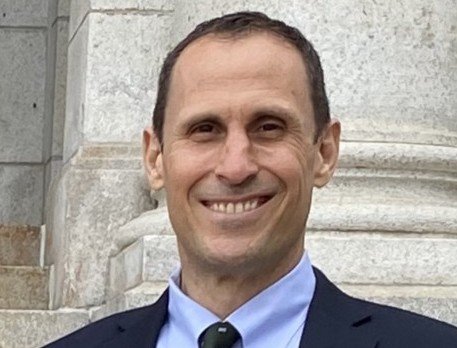
Eric Ortiz lives in the Wedge with his family. He is executive director of the Strong Mind Strong Body Foundation, a national youth and community development nonprofit based in Minneapolis, and associate director of research for The Pivot Fund, a venture philanthropy organization that invests in community newsrooms serving underserved communities.



Comments
No comments on this item Please log in to comment by clicking here