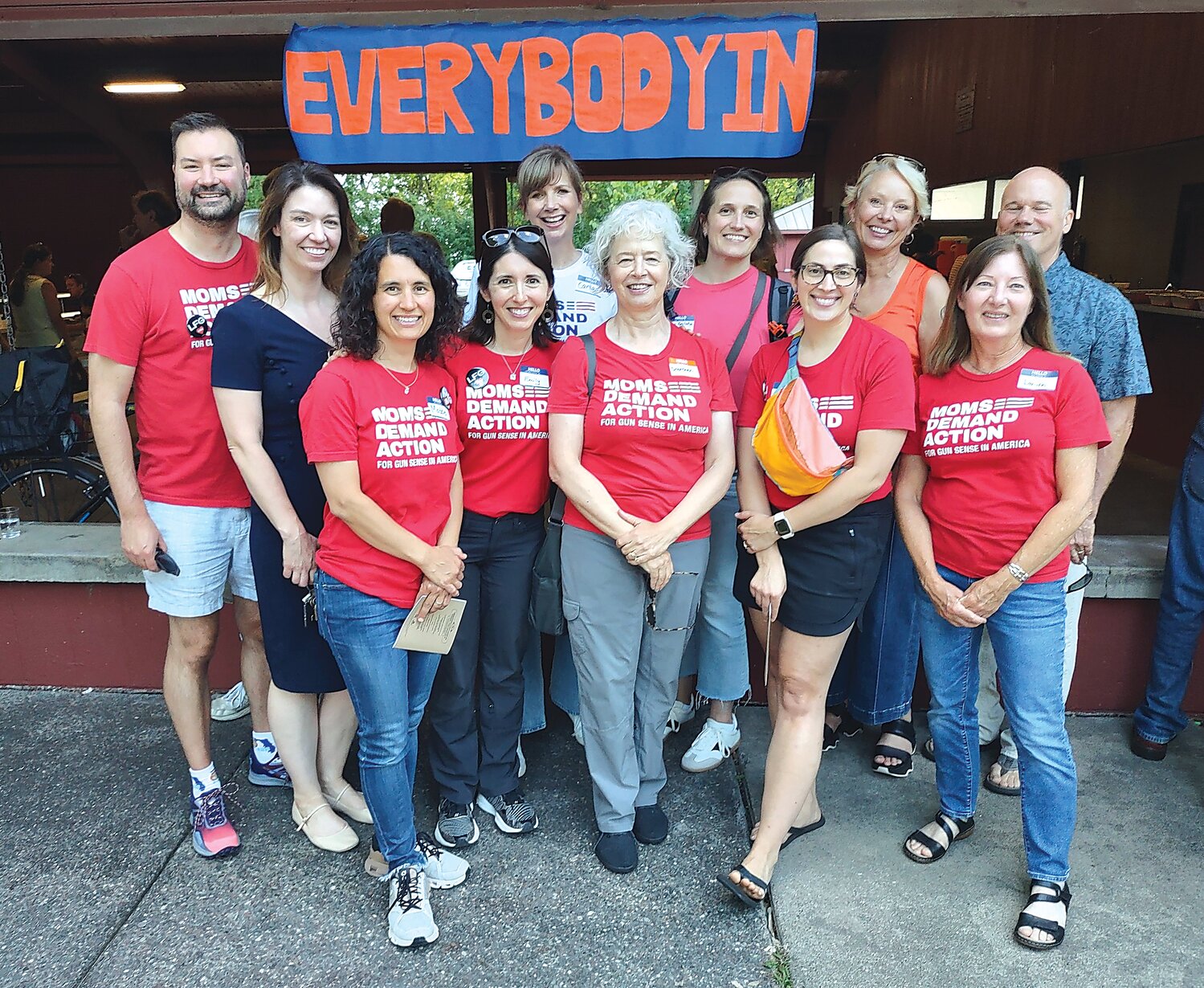
In the wake of several high-profile incidents of gun violence in the Twin Cities metro over the last several months, including the deadly mass shooting at Annunciation Catholic School in Minneapolis, Minnesota’s Extreme Risk Protection Order Act, informally known as a “red flag” law, has been quietly gaining more attention.
The law, which went into effect in January 2024, allows authorities to temporarily remove firearms from people who pose a threat to themselves or others, and also prevents them from purchasing firearms for a period.
Gretchen Damon, one of the leaders of the St. Paul chapter of Moms Demand Action for Gun Sense in America, called Extreme Risk Protection Orders, or ERPOs, a “life-saving tool.” She and her fellow chapter members have been working tirelessly over the last several months to increase awareness of the law so that more Twin Cities residents know this option is available to them if they have a loved one in crisis who has access to firearms.
Under the Minnesota law, a family member or member of the household can file a petition to request an ERPO if they feel they are at risk of harming themselves or others.
Ramsey County Attorney John Choi, whose office has been working to help enforce the new law, said it is often family members or friends who are the first to see the warning signs.
“This new law allows those individuals to do something about it,” Choi said. In the case of school shootings, Damon said oftentimes the perpetrator shows signs of troubling behavior, and people may be aware of whether they have access to firearms. “If those family members know about ERPOs they could use that as a tool to intervene before a tragic event like the Annunciation shooting happened,” she said.
But the burden does not have to be solely on family members, as that often “puts people in a really difficult situation,” Choi said. Law enforcement and city and county attorneys can also file a petition with the court to request an ERPO.
Concerned family members can call police, who will then respond and evaluate whether the person poses an immediate or significant risk or danger to themselves or others that would qualify for an ERPO, according to Choi. If it is an emergency situation, the time from when a petition is filed to when the ERPO is granted can often be 24 hours or less.
Getting law enforcement to use this still relatively new prevention tool is another story. Choi said his office held a training last December to educate local law enforcement agencies on how to incorporate ERPOs into their practices.
“If you look at other states, Washington, California, you’ll see that there’s always been a slow ramp up, but once everyone understands and gets how this tool can be a real resource to prevent gun violence and tragedies from happening, people then start using it.”
A recent investigation by the Minnesota Star Tribune found that of the 24 ERPO petitions filed in Ramsey County since the law went into effect, just two involved the St. Paul Police Department.
A St. Paul police spokesperson told the Monitor that they have been “actively working” on creating new department policies and practices regarding the red flag law. Damon said the tragedy at Annunciation Catholic School left her “heartbroken,” especially after the assassination of State Representative Melissa Hortman and her husband, Mark, in June.
“We were just devastated by that and then this happens in our sister city. We are just kind of reeling from it,” she said.
.jpg)


